
Accountability Considerations For Wildland & Brush Fire Operations
Accountability considerations for wildland and brush fire operations across the United States start with one simple question: can command quickly confirm who is operating, where they’re assigned, and whether every crew is accounted for?
A firefighter accountability system needs to work beyond the command post, especially when crews spread across firelines, access roads, staging areas, divisions, and rehab.
Brush Fire Conditions Can Complicate Crew Tracking
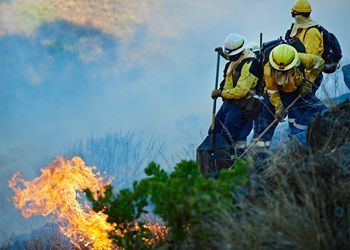
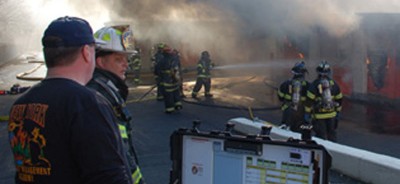
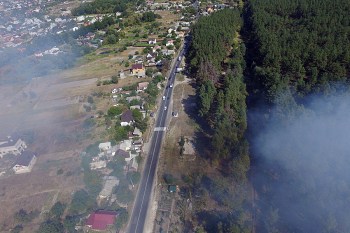
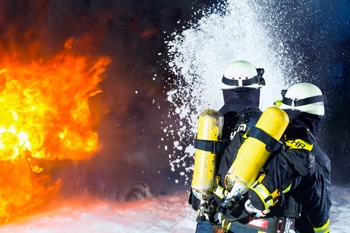
A brush fire may start small, but it can quickly pull crews in several directions. One engine may protect structures, another may work a flank, and hand crews may move into heavier fuels. Command can lose track of movement when updates rely only on radio traffic.
- Multiple access points from roads, gates, trails, or neighborhoods.
- Crews moving between flanks, structures, staging, and rehab.
- Smoke, darkness, terrain, and vegetation limiting visibility.
- Mutual aid crews arriving with different accountability habits.
Wildland Fire Accountability Starts Early
Wildland fire incidents can grow before command has a full picture of the scene. Wind, fuel, slope, access problems, and nearby structures can all change the first-arriving officer’s priorities. Accountability should start as soon as crews arrive, check in, and receive assignments.
Accountability Tags Give Command A Physical Reference
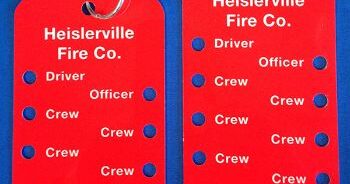
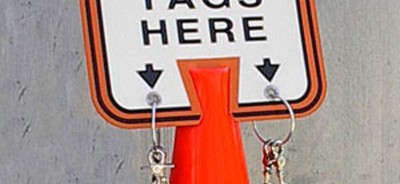
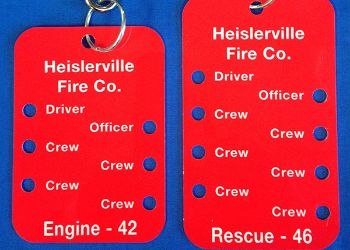
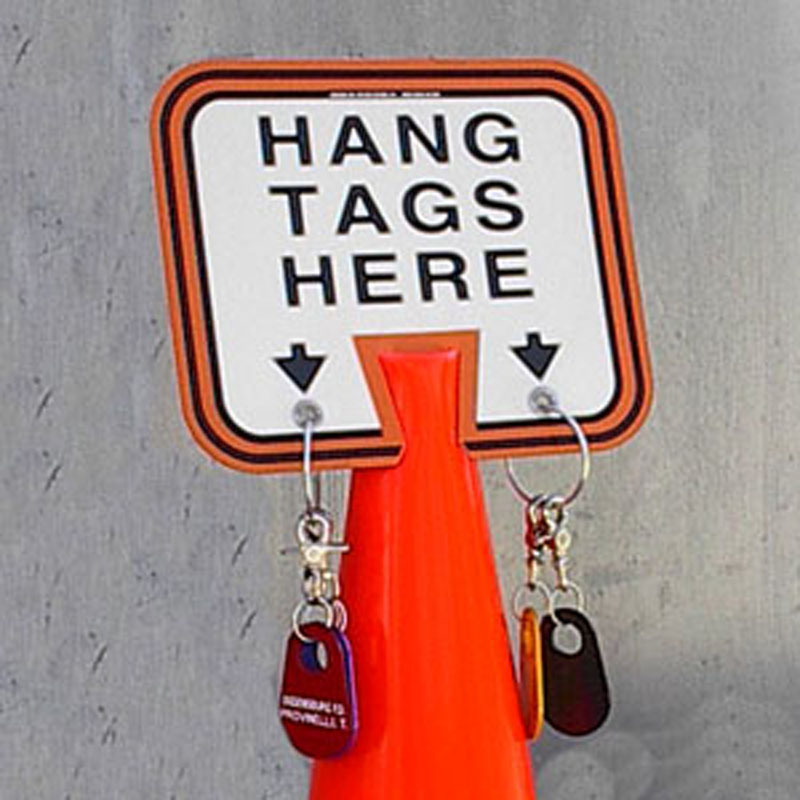
Accountability tags help command identify which firefighters are operating at the incident. A tag system can show who checked in, which crew they belong to, and where they’re assigned. This matters even more when firefighters work away from the apparatus or outside a compact scene.
A fire tag should be simple, durable, and easy to read under pressure. Departments can use tags to support daily calls, structure fires, technical incidents, brush fire response, and larger wildland fire operations.
Incident Boards Keep Assignments Organized
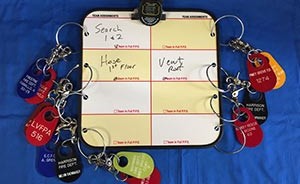
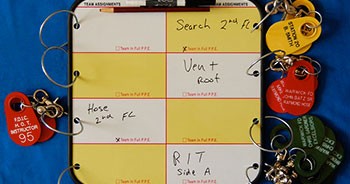
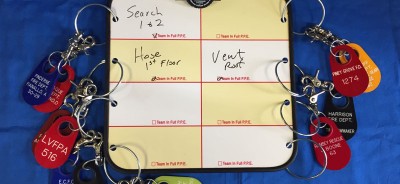
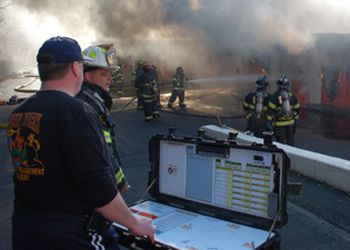
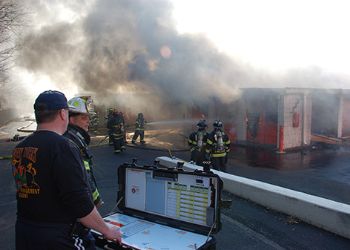
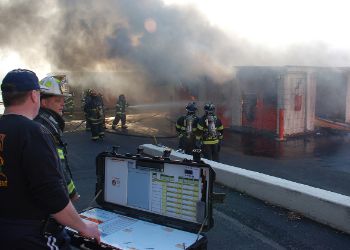
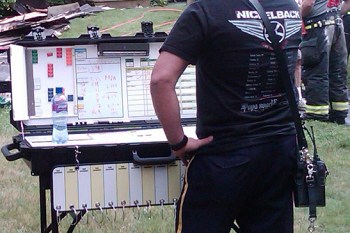
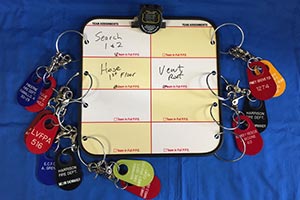
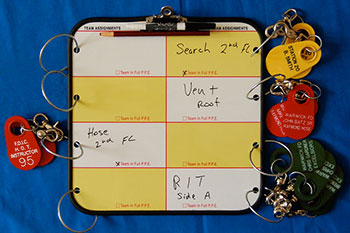
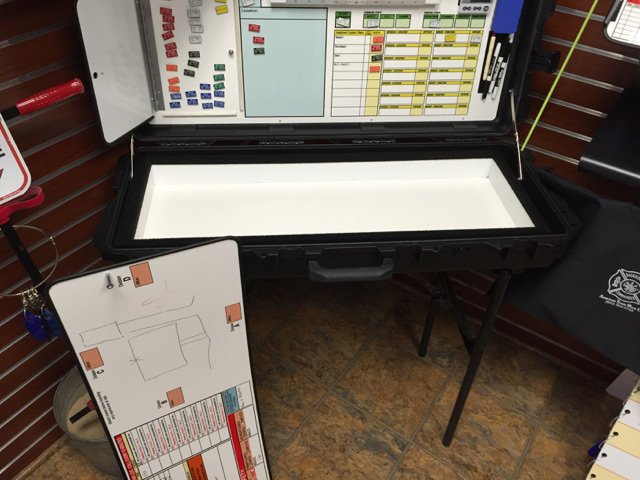
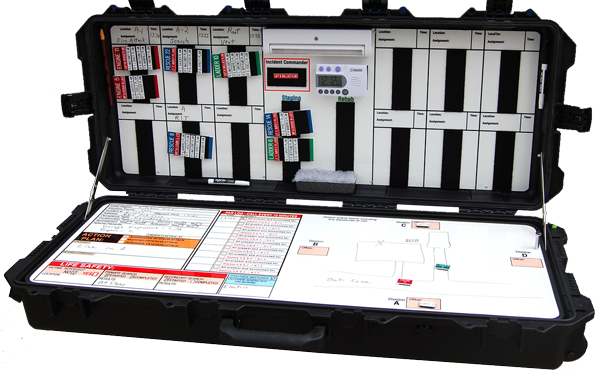
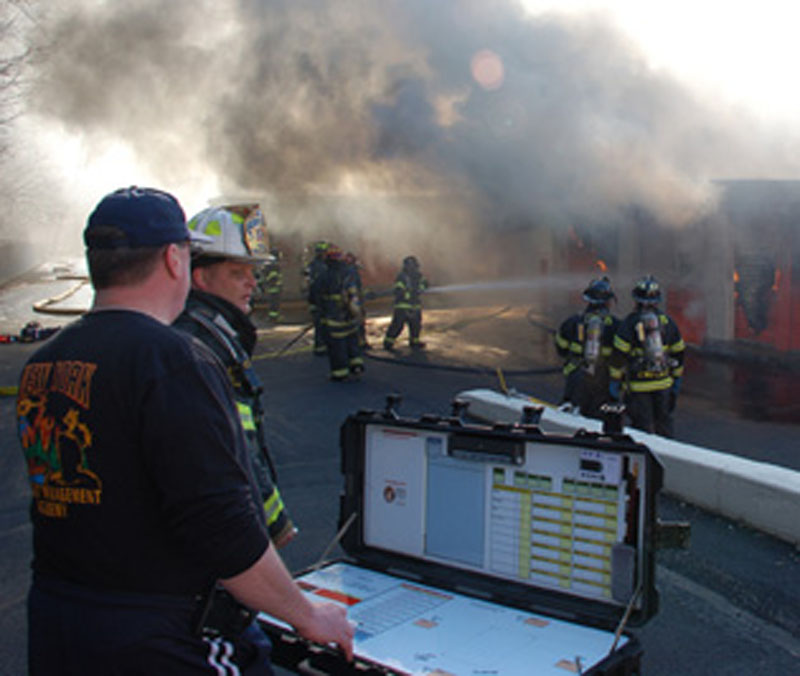
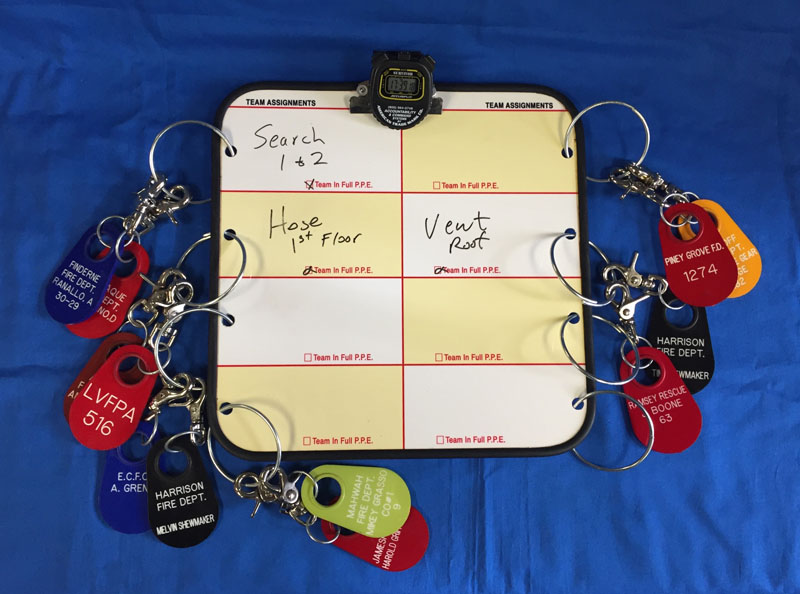
An accountability board gives command a single view of the incident. For wildland and brush fire operations, the board should make it easy to track crews by division, group, flank, staging, water supply, rehab, and reserve.
A useful board should not feel complicated. Command needs clean sections, clear labels, and simple tag placement. If the board takes too long to update, crews may stop using it during the busiest part of the incident.
PAR Tags Help Crews Confirm Personnel Status
A PAR tag supports Personnel Accountability Report checks when command needs to confirm crew status. PAR checks matter after sudden wind shifts, maydays, withdrawal orders, evacuation calls, division changes, or communication problems.
The tag doesn’t replace a verbal report from an officer or crew leader. It gives command a cleaner way to compare the board against the people who should be accounted for. When a PAR check starts, command can quickly see which crews need confirmation and where they were last assigned.
Division & Group Tracking Matters In Open Terrain
Wildland fire operations often divide work by geography and function. Crews may move from initial attack to structure protection, then to mop-up or rehab. Each move needs to show up in the accountability system.
When command updates the board as crews move, the incident picture stays current. When updates lag, the board can create false confidence. A simple process for moving accountability tags between assignments helps command keep the board aligned with the real fireground.
Staging Needs Its Own Accountability Process
Staging can become crowded during a working brush fire, especially when multiple agencies respond. Command needs to know which crews have checked in, which crews are available, and which crews already received assignments.
- Checked-In Crews Waiting For Assignment
- Assigned Crews Operating Under A Division Or Group
- Crews Rotating Through Rehab
- Released Crews Leaving The Incident Or Returning To Quarters
Mutual Aid Requires Shared Expectations
Mutual aid strengthens a wildland fire response, but it can also complicate accountability. Different departments may use different tag systems, riding lists, passports, or terminology. Command should set expectations before crews enter the hazard area.
Every incoming crew should know where to check in, where tags go, who tracks assignments, and how PAR checks will happen. A simple, visible system helps outside crews plug into command without creating extra confusion.
Build Accountability Around Simple Habits
The best systems work because crews use them consistently. Accountability tags, PAR tags, fire tags, and command boards should support daily operations, training, mutual aid, and major incidents. The process should feel familiar before a large wildland fire tests it.
American Trade Mark Co. helps fire departments strengthen accountability with firefighter accountability tags, command boards, and customizable tracking products built for real incident command needs.
Related Posts
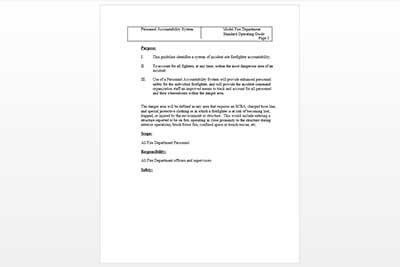
A fire department accountability standard operating guideline gives departments across the USA a consistent...
Choosing custom firefighter plaques gives your department a lasting way to recognize service, leadership,...
Across the United States, fire departments rely on structured systems like firefighter ID tags,...
Fire departments across the United States rely on the National Incident Management System (NIMS)...
Firefighting is a demanding profession that requires precision, quick decision-making, and coordinated efforts to...
The importance of firefighter accountability tags cannot be overstated in the realms of fire...
Is your community adding a mobile command center to your emergency services garage? What...
According to statistics from the National Institute for Occupational Safety & Health, many of...
Firefighter Safety is a multi-agency effort, so our New Jersey-based American Trade Mark Company...
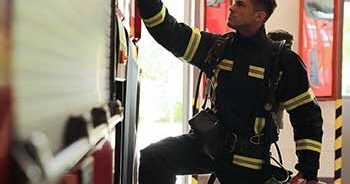
Our team at the New Jersey-based American Trade Mark company knows that a firefighter’s...
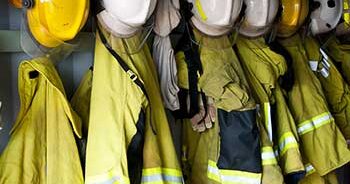
American Trade Mark wants to ensure that every hero gets home safely, which is...
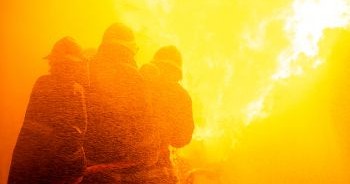
During a time of mask-wearing and social distancing are firefighters really at risk? After...
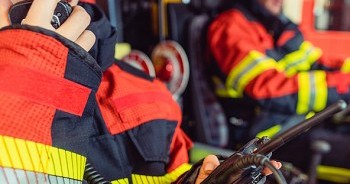
Share information quickly and clearly in an emergency. Efficient resource allocation, firefighter safety, and...
Firefighters put their lives on the line day in and day out, year after...
At American Trade Mark, we manufacture and distribute custom products and accessories to compliment...
At American Trade Mark, we offer incident command boards for departments of all sizes...
Ensuring effective fireground communications for both firefighters and incident command with strategic planning and...
Improve fireground communication and firefighter safety with fire department communication tips for bad weather...
At American Trade Mark, we understand that the incident commander and incident safety officer...
Track departments and communicate more efficiently with tools for coordinating emergency response from American...
As fires in the wildland-urban interface continue to rise, so do the demands on...
We want to help incident commanders find ways to reduce firefighter stress with tips...
As a nationwide provider of firefighter accountability and incident command equipment, American Trade Mark...
Before diving head first into the latest and perceived greatest, at American Trade Mark,...
Incident command and firefighter safety have come a long way since Benjamin Franklin’s 1736...
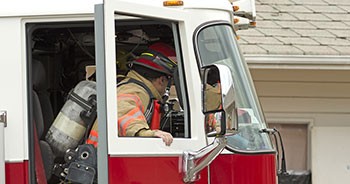
Don’t get caught off guard on your next emergency response call. At American Trade...
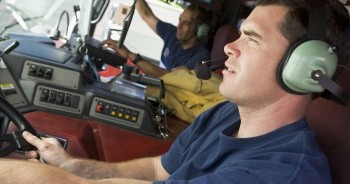
At American Trademark we've put together some high-stress fireground communication tips for when your...
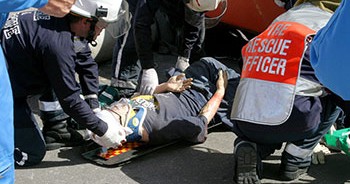
At American Trademark, we understand that to run an effective emergency response team it...
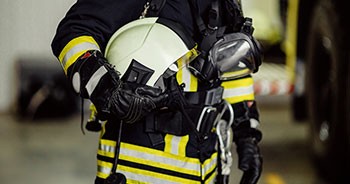
At American Trademark, we've put together a list of useful tips for accountability officers....
At American Trademark, we want to make sure that you are aware of how...
When you’re a firefighter, everyone looks out for everyone else by wearing ID tags—and...
Equipment accountability is important for first responders which is why American Trade Mark offers accountability...
American Trade Mark specializes in the manufacturing of first responder scene safety products and...
As an industry leader in products dedicated to fire personnel tracking and accountability plan...
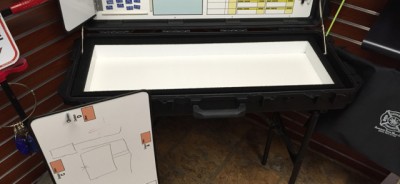
Here at American Trade Mark, we understand that choosing the right command board for...
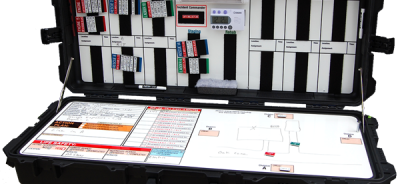
American Trade Mark Co. is a well-known leader in the firefighter accountability system field...
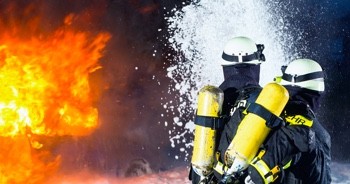
At American Trade Mark, we serve communities by making it possible to keep track...
Enhance your fire department’s personnel accountability system with American Trade Mark Co. accountability tag...
Firefighter tracking systems are a vital part of first responder safety. They help Incident...
Firefighter status boards are an essential part of managing successful fire ground operations. American...