
How Incident Command Boards Support NIMS & ICS Compliance
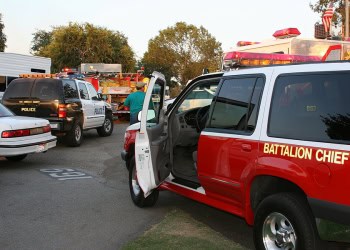
Fire departments across the United States rely on the National Incident Management System (NIMS) and Incident Command System (ICS) to coordinate operations during fires, rescues, hazardous materials incidents, and other emergencies. Incident command boards are the practical tools that bring those frameworks to life on the fireground — helping command staff organize resources, track personnel, and maintain clear accountability as incidents unfold.
Understanding The Role Of Incident Command Boards In NIMS
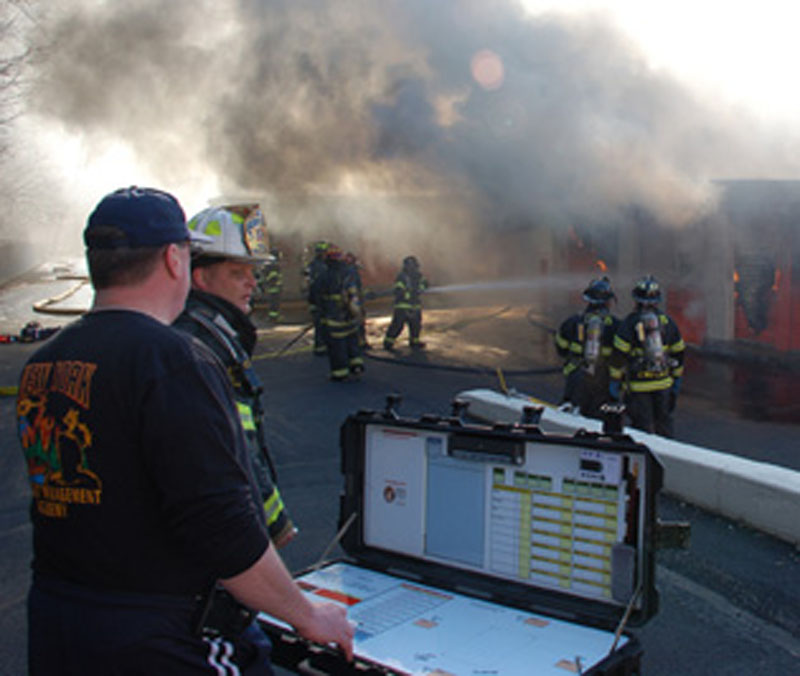
To operate effectively within the NIMS system, departments must use standardized processes that support clear communication and structured command. Incident command boards serve as practical tools that help incident commanders apply these standards during active incidents.
- Standardized Command Organization: Incident command boards provide a structured format for organizing operational divisions, assignments, and command roles during an incident.
- Clear Operational Communication: Visual command layouts allow commanders and sector leaders to quickly understand assignments and operational priorities.
- Resource Coordination: Command boards help track apparatus, personnel, and equipment deployment across the incident scene.
- Structured Incident Documentation: Tactical notes and assignments can be recorded in real time to support organized decision-making.
Key Components Of Fire Command Boards
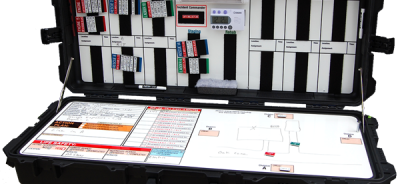
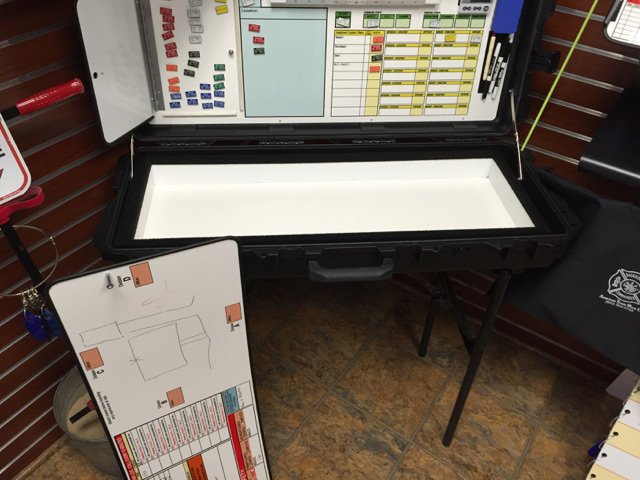
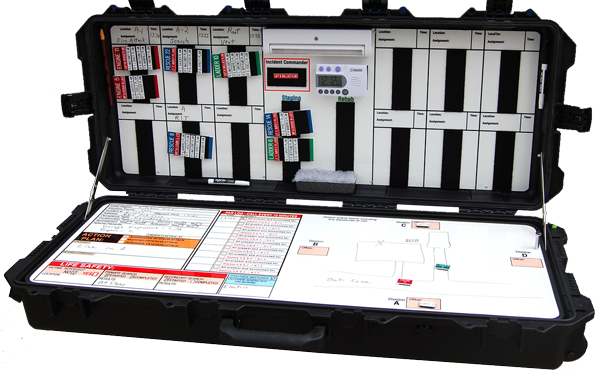
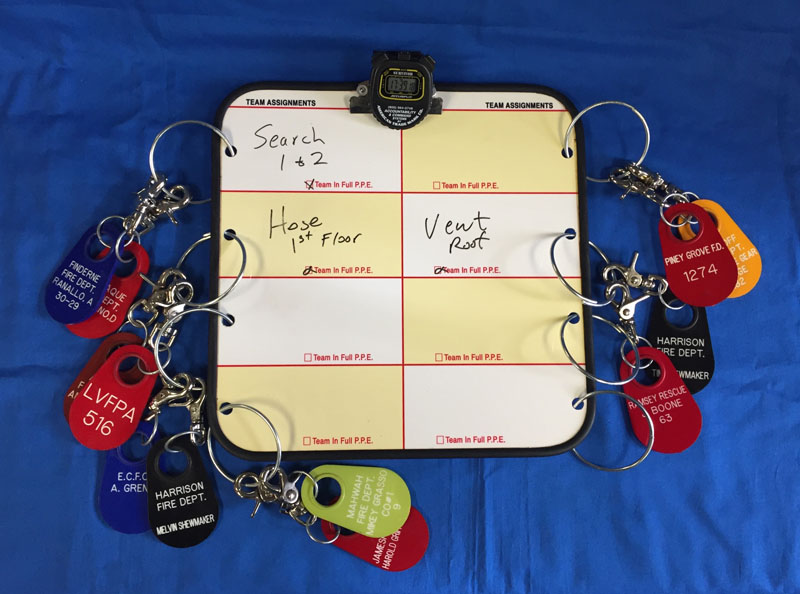
Modern firefighter command boards are designed to support the operational structure required by ICS incident management tools. These boards typically include dedicated areas for tracking assignments, personnel, and incident details.
- Incident Overview Section: Displays the incident type, location, operational objectives, and command assignments.
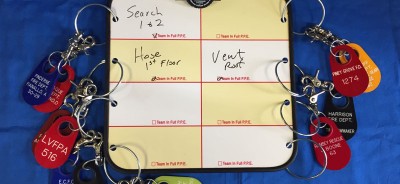
- Resource Tracking Area: Tracks responding units, apparatus, and specialized resources assigned to the incident.
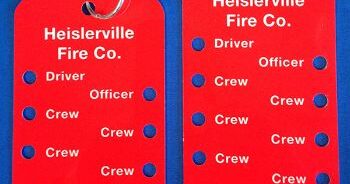
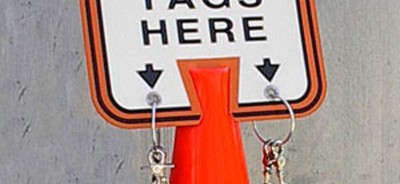
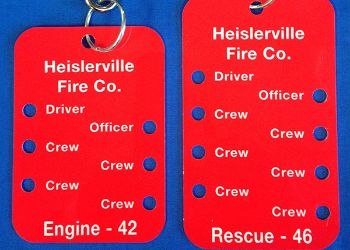
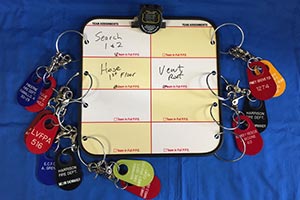
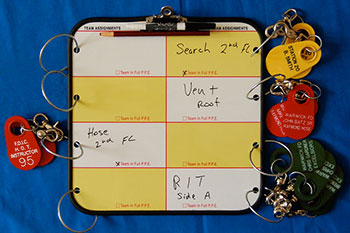
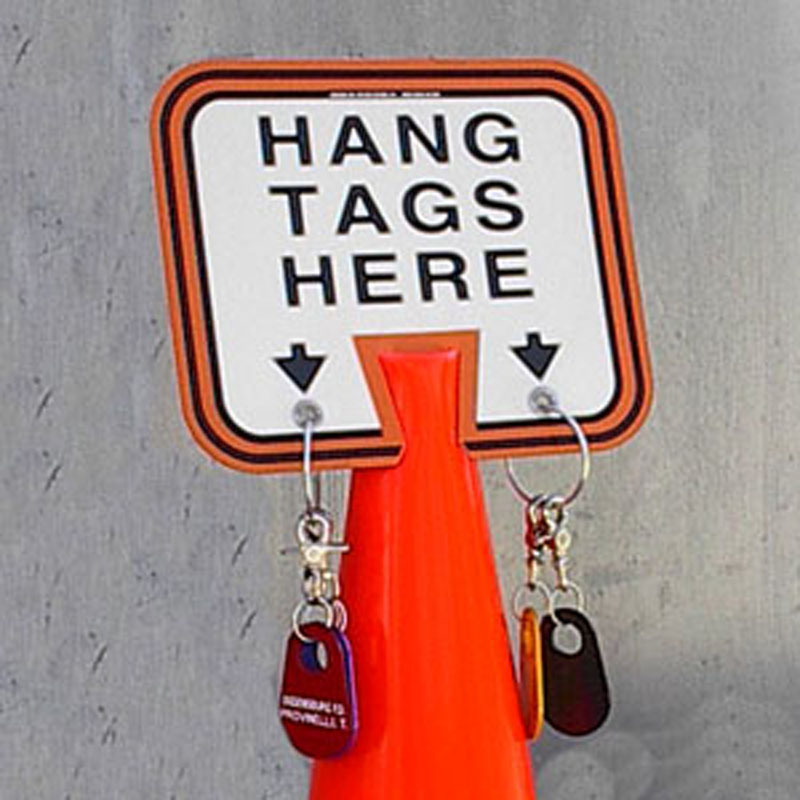
- Personnel Accountability System: Uses tags or identifiers to monitor firefighter assignments and location on the fireground.
- Tactical Planning Panels: Provides space to record strategies, sector assignments, and operational priorities.
How Incident Command Boards Support Training & Preparedness
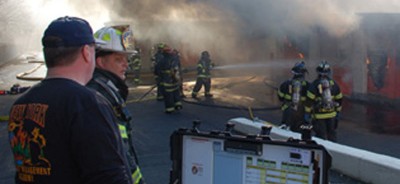
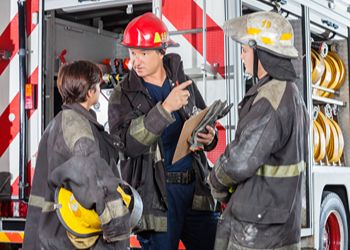
Fire departments regularly use incident command boards during drills and training exercises to reinforce NIMS and ICS procedures, building familiarity with incident management protocols before facing real emergencies. Officers can practice organizing incident operations during scenario-based exercises, while accountability drills let departments run personnel tracking under realistic fireground conditions.
To practice working together under the NIMS ICS framework, joint exercises bring multiple agencies under a unified command structure before a real incident demands it.
Fire Command Accountability Systems Improve Personnel Safety
When a firefighter goes missing or is injured on the fireground, seconds matter. Fire command accountability systems integrated into command boards use accountability tags to track firefighter assignments and divisions in real time — giving commanders constant awareness of who is operating on the fireground.
Strengthen Incident Management With Professional Command Boards
Reliable incident command boards help fire departments maintain NIMS accountability, coordinate resources, and manage complex incidents effectively. These tools support the structured processes required by ICS incident management tools while improving communication and operational awareness on the fireground.
American Trade Mark provides durable fire command boards, fire command accountability systems, and specialized fire incident command equipment designed to support professional incident management. Contact us to learn how our command solutions can help your department maintain NIMS and ICS compliance while improving fireground organization and responder safety.
Related Posts
A fire department accountability standard operating guideline gives departments across the USA a consistent...
Accountability considerations for wildland and brush fire operations across the United States start with...
Choosing custom firefighter plaques gives your department a lasting way to recognize service, leadership,...
Across the United States, fire departments rely on structured systems like firefighter ID tags,...
Firefighting is a demanding profession that requires precision, quick decision-making, and coordinated efforts to...
The importance of firefighter accountability tags cannot be overstated in the realms of fire...
Is your community adding a mobile command center to your emergency services garage? What...
According to statistics from the National Institute for Occupational Safety & Health, many of...
Firefighter Safety is a multi-agency effort, so our New Jersey-based American Trade Mark Company...
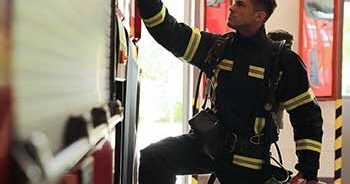
Our team at the New Jersey-based American Trade Mark company knows that a firefighter’s...
American Trade Mark wants to ensure that every hero gets home safely, which is...
During a time of mask-wearing and social distancing are firefighters really at risk? After...
Share information quickly and clearly in an emergency. Efficient resource allocation, firefighter safety, and...
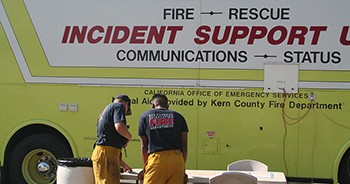
Firefighters put their lives on the line day in and day out, year after...
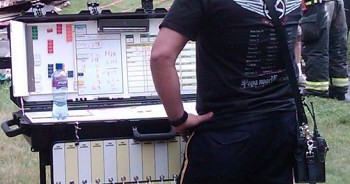
At American Trade Mark, we manufacture and distribute custom products and accessories to compliment...
At American Trade Mark, we offer incident command boards for departments of all sizes...
Ensuring effective fireground communications for both firefighters and incident command with strategic planning and...

Improve fireground communication and firefighter safety with fire department communication tips for bad weather...

At American Trade Mark, we understand that the incident commander and incident safety officer...
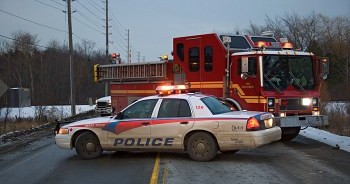
Track departments and communicate more efficiently with tools for coordinating emergency response from American...
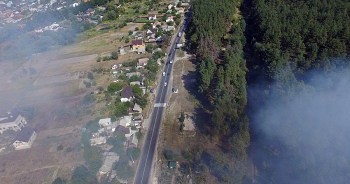
As fires in the wildland-urban interface continue to rise, so do the demands on...
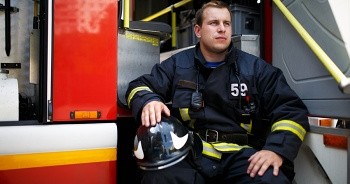
We want to help incident commanders find ways to reduce firefighter stress with tips...
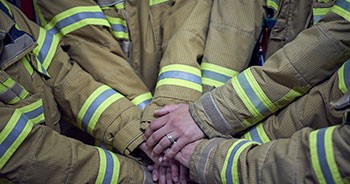
As a nationwide provider of firefighter accountability and incident command equipment, American Trade Mark...
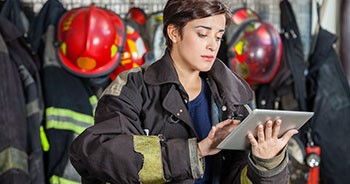
Before diving head first into the latest and perceived greatest, at American Trade Mark,...
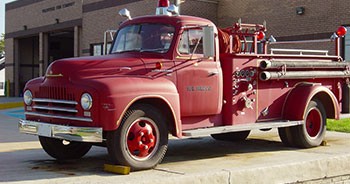
Incident command and firefighter safety have come a long way since Benjamin Franklin’s 1736...
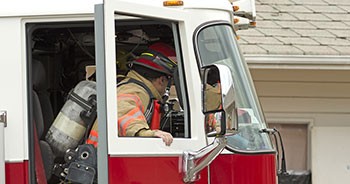
Don’t get caught off guard on your next emergency response call. At American Trade...
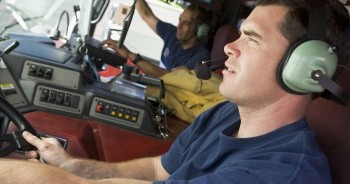
At American Trademark we've put together some high-stress fireground communication tips for when your...
At American Trademark, we understand that to run an effective emergency response team it...
At American Trademark, we've put together a list of useful tips for accountability officers....
At American Trademark, we want to make sure that you are aware of how...
When you’re a firefighter, everyone looks out for everyone else by wearing ID tags—and...
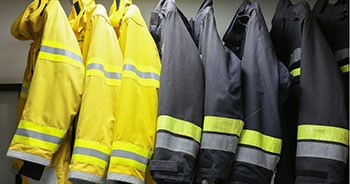
Equipment accountability is important for first responders which is why American Trade Mark offers accountability...
American Trade Mark specializes in the manufacturing of first responder scene safety products and...
As an industry leader in products dedicated to fire personnel tracking and accountability plan...
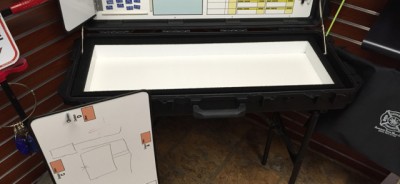
Here at American Trade Mark, we understand that choosing the right command board for...
American Trade Mark Co. is a well-known leader in the firefighter accountability system field...
At American Trade Mark, we serve communities by making it possible to keep track...
Enhance your fire department’s personnel accountability system with American Trade Mark Co. accountability tag...
Firefighter tracking systems are a vital part of first responder safety. They help Incident...
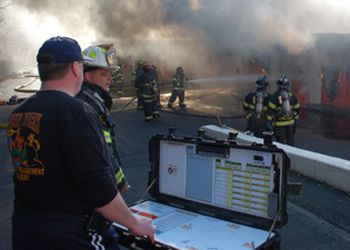
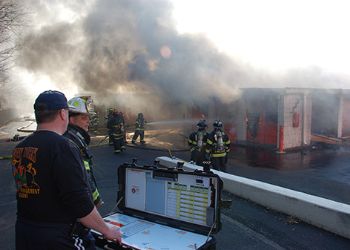
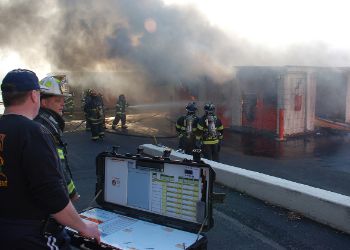
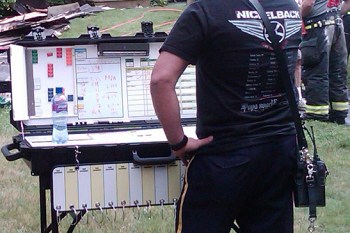
Firefighter status boards are an essential part of managing successful fire ground operations. American...