
Managing Mutual Aid Accountability Across Emergency Departments
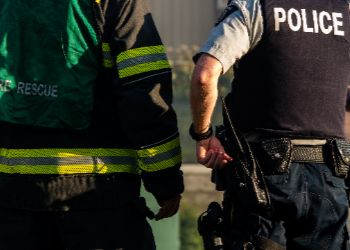
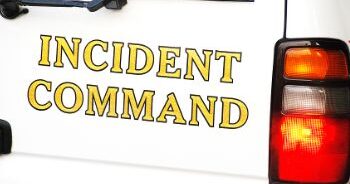
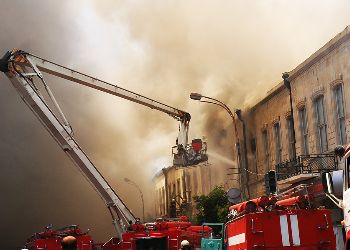
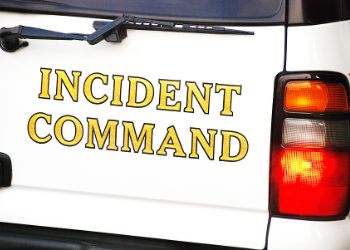
Managing mutual aid accountability across emergency departments in the United States is critical for maintaining safety, visibility, and control during complex, multi-department incidents. As interagency response becomes more common across the fire service, utility companies, and electric utilities, your ability to track personnel and maintain incident command accountability directly impacts outcomes.
Why Unified Command Accountability Drives Safer Outcomes
When multiple agencies respond together, unified command accountability ensures everyone operates under a shared structure. Without it, gaps in communication and personnel tracking appear quickly.
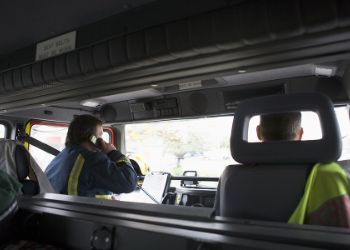
A unified command approach gives you a single operational picture. It aligns priorities, improves coordination, and ensures every responder is accounted for throughout the incident. This is especially important during large-scale mutual aid operations where departments may follow different internal protocols.
The Real Challenges In Multi-Department Incidents
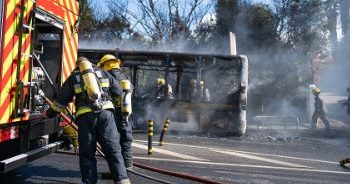
Multi-department incidents introduce complexity that can break down even well-designed systems. Each agency may bring different procedures, equipment, and expectations.
You may encounter communication gaps, incompatible tracking systems, or unclear leadership roles. These issues slow response times and increase risk. Addressing them requires planning before the incident begins, not during it.
Key Elements Of Effective ICS Accountability Systems
Strong incident command system (ICS) accountability depends on consistency, clarity, and integration across departments. Your system should work the same way regardless of who arrives on scene.
- Standardized Communication Protocols
- Common Terminology Across Agencies
- Clear Chain Of Command Structure
- Real-Time Personnel Tracking Methods
- Integrated Command Board Systems
Proven Strategies For Cross-Department Accountability
Maintaining cross-department accountability requires alignment across agencies before incidents occur. You need shared expectations, compatible tools, and repeatable processes.
- Define Roles & Responsibilities Clearly
- Use Compatible Or Shared Accountability Systems
- Establish Unified Reporting Procedures
- Align Training Standards Across Agencies
- Conduct Regular Interagency Drills
How Firefighter Accountability Tags Strengthen Personnel Tracking
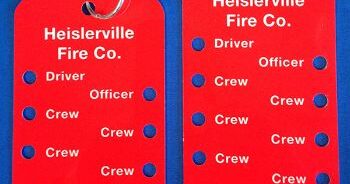
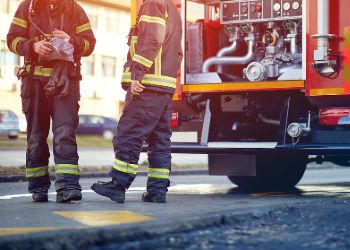
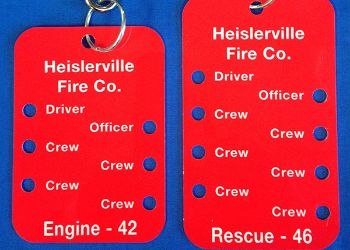
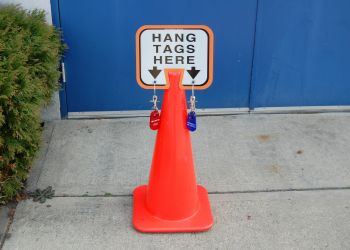
Firefighter accountability tags remain one of the most reliable tools for real-time personnel tracking. They provide a simple, durable way to identify assignments, locations, and status without relying solely on digital systems.
When integrated into your ICS, accountability tags support fast decision-making. You can quickly verify crew locations, confirm assignments, and reduce the risk of missing personnel during high-risk operations.
How Command Board Integration Improves Visibility
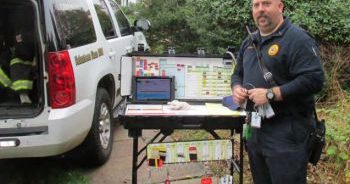
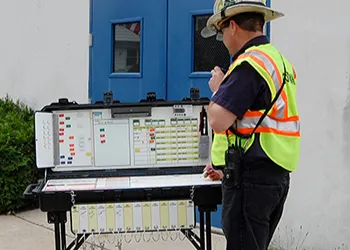
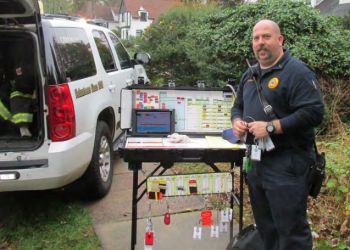
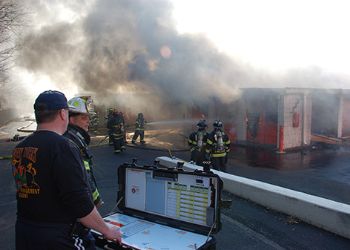
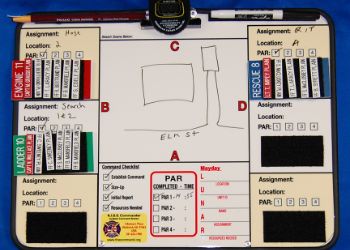
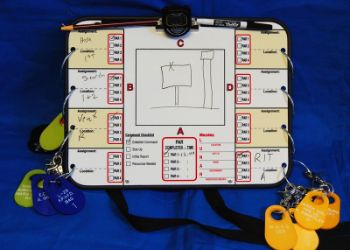
Command board integration gives you a centralized view of your entire operation. Whether physical or digital, command boards allow you to track crews, assignments, and status in one place.
When paired with accountability tags and standardized processes, command boards reduce confusion. They help command staff maintain situational awareness and make faster, more informed decisions during dynamic incidents.
Why Utility Companies Must Be Integrated Into ICS Accountability
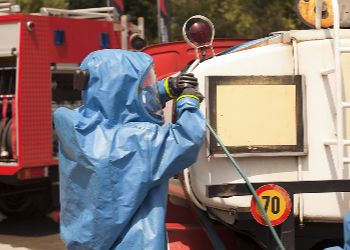
Utility companies and electric utilities often play a critical role in emergency response. Downed power lines, gas leaks, and infrastructure damage require close coordination with fire and rescue teams.
Integrating these partners into your incident command accountability structure ensures they operate within the same system. This reduces delays, improves communication, and keeps all personnel aligned under unified command.
Building Stronger Coordination With Mutual Aid Practitioners
Mutual aid practitioners are responsible for building the relationships and frameworks that support effective collaboration. Their work happens long before an incident occurs.
- Establish Formal Mutual Aid Agreements
- Coordinate Joint Training Programs
- Develop Shared Accountability Protocols
- Align Equipment & Communication Systems
- Create Scenario-Based Response Plans
How To Ensure Consistent Incident Command System Coordination
Consistency is what makes ICS coordination effective across different departments and jurisdictions. Your processes must be repeatable and easy to follow under pressure.
- Standardize ICS Training Across All Agencies
- Evaluate Performance After Every Incident
- Reinforce Accountability Protocols Regularly
- Maintain Updated Equipment & Systems
- Promote A Culture Of Accountability
Strengthen Your Mutual Aid Accountability Systems Today
Managing mutual aid accountability across emergency departments requires the right systems, tools, and preparation. With strong incident command accountability, integrated command boards, and reliable firefighter accountability tags, you can improve coordination and protect your personnel.
American Trade Mark provides accountability solutions designed to support real-world emergency response. Explore your options, upgrade your systems, and equip your team with tools that improve visibility and control on every incident.
Related Posts
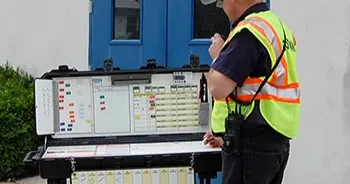
How command boards help track PAR checks in real time is a practical fireground...
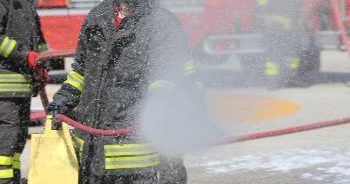
Fire hose testing helps ensure the safety and reliability of your firefighters' equipment during...
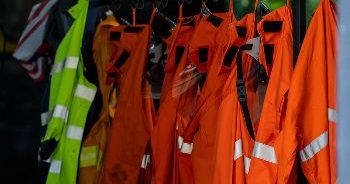
Proper maintenance and timely assessment of fire gear are crucial to ensure the safety...
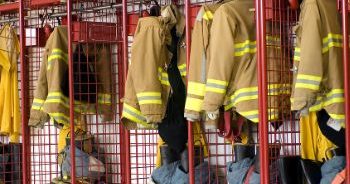
Firefighters are always on call, even when they’re not on the clock. Ensuring readiness...
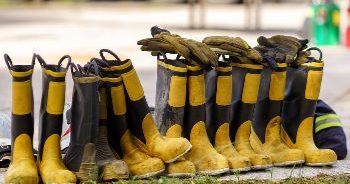
Across the United States, fire departments continually face challenges in effectively tracking and managing...
Managing a chemical spill involves numerous challenges, often requiring coordination across multiple agencies and...
Secondary collapses are one of the most dangerous threats firefighters face on the fireground....
Fireground safety is a given priority, but even the most experienced crew may overlook...
Fireground accountability is crucial for maintaining safety and efficiency during emergency operations. Despite rigorous...
Magnetic command boards are a practical and flexible tool for organizing search-and-rescue missions. They...
American Trade Mark Co. is committed to supporting first responders nationwide by providing valuable...
In developing safe and effective responses to gas leaks nationwide, it is critical for...
Preserving a fire scene is important for helping first responders understand and investigate the...
Wildfire smoke poses significant risks to firefighter health, requiring rigorous safety protocols to minimize...
Ensuring firefighter safety through rigorous gear inspection and maintenance is fundamental to any fire...
Firefighting is a demanding profession that requires precision, quick decision-making, and coordinated efforts to...
Helmet decals are more than a means of identification or decoration for firefighters. These...
The importance of firefighter accountability tags cannot be overstated in the realms of fire...
Firefighting is a challenging profession where every second matters and can be the difference...
Firefighter equipment markers have a crucial role in ensuring fire services' safety and efficiency....
Ensuring firefighter safety amidst the challenges posed by electrical fires is a paramount concern...
Ensuring firefighter safety in high-risk industrial settings requires strict adherence to safety protocols and...
In the dynamic and demanding world of emergency response, every second counts. It's essential...

As the popularity of food trucks continues to grow, first responders need to have...
Incident command places immense pressure on your leadership team. Rapid decision-making during an emergency...
When emergencies strike, effective incident command strategies save lives. However, methods employed to manage...
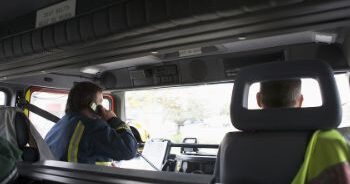
Are you looking to improve your communications when deploying your incident command truck in...
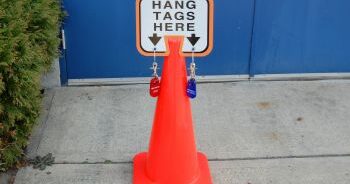
Crew-based accountability is essential for firefighters to do their job successfully, and accountability tags...
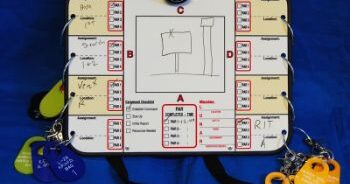
While training to send and receive mayday calls is part of every firefighter trainee's...
At American Trade Mark, we know just how grueling but rewarding a career in...
According to statistics from the National Institute for Occupational Safety & Health, many of...
Firefighters often arrive first on the scene of not only fires but national disasters...
Every day, firefighters risk their lives to save people and property, which makes implementing...

A building collapse situation has the potential for serious harm to emergency personnel with...
First Responders should have five functional areas set up within their Incident Command Systems...
At American Trade Mark we know firefighters encounter dangerous conditions on a consistent basis,...
First responders go all out for their communities daily, without any thought of recognition,...
COVID-19 has impacted our communities in every way. Surprisingly, however, despite warnings to distance...
Hotel and resort fires are unique because of the sheer size, height, and number...

Tracking first responders in hoarder home fires is crucial for safety, and at American...

Bolster your current wildfire fireground communications with incident command systems and tools from American...
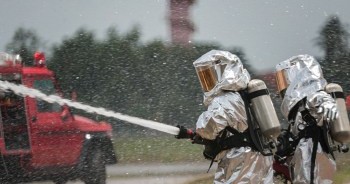
Get, communicate with, and track the people and information you need during your next...

Limit chemical exposure hazards in your firefighters with accountability tags from American Trade Mark....
Improve your firefighter safety and survival rates with these nine tips from American Trade...
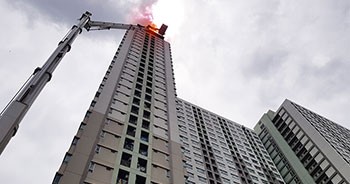
Face the uniquely difficult set of challenges involved in high rise firefighter safety with...
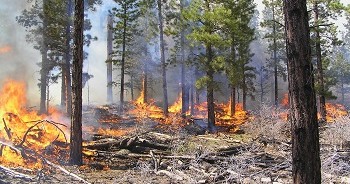
Whether you are on a dedicated woodland fire crew or IC for a structural...

During a time when first responders are being asked to be prepared for more...
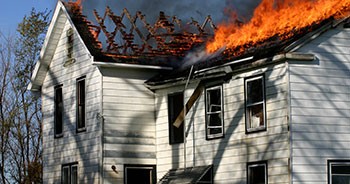
If you're wondering how to keep firefighters safe during defensive firefighting, count on the...
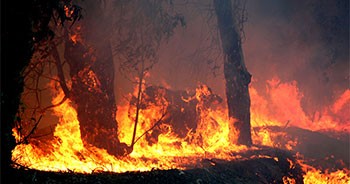
At American Trade Mark, we serve nationwide as a leading manufacturer of wildland fire...

At American Trademark, we want to help you with risk management and firefighter injury...
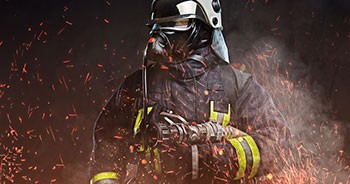
At American Trade Mark Co. our priority is helping you stay safe from common...
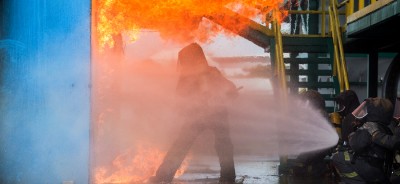
At American Trade Mark, all of our products are made with the safety of...
The most important job of the Incident Commander is firefighter scene safety. Communication, organization,...
At American Trade Mark, we offer an effective range of accountability products geared towards...



If your department is looking for additional funding to ensure your firefighters have all...