
What Is A CAN Report In Firefighting?
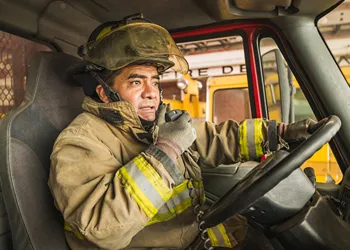
CAN reports in firefighting give crews across the United States a consistent way to communicate conditions, actions, and needs to their assigned supervisor or incident command. A useful report explains what you’re facing, what you’re doing, and what support you need.
That brief update helps command assess progress, coordinate resources, and recognize when the incident action plan needs to change.
What Does CAN Mean In Firefighting?
CAN stands for Conditions, Actions, Needs. The National Fire Academy teaches CAN reports as part of tactical communications. Conditions describe the situation at your location, actions explain your crew’s work and progress, and needs identify resources or assistance required.
Department procedures determine how you deliver these reports and where they fit within your incident command structure.
Conditions Tell Command What You’re Facing
The Wellston Fire Department identifies location, obstacles, smoke, heat, and visibility as relevant details in a CAN report. Describe the conditions affecting your assignment with enough detail to establish a useful picture.
“Heavy smoke on Division 2, fire extending into the hallway” tells command more than “conditions are bad.” Distinguish observations from suspected problems, and be clear about areas your crew hasn’t checked.
Actions Explain Your Progress & Obstacles
State what your crew is doing and whether the assigned objective is being achieved. Advancing a hoseline, searching bedrooms, or checking for extension describes activity; reporting that fire is knocked down or a search is incomplete explains progress.
If an obstacle prevents completion, identify it. Command needs to know when locked doors, limited access, or worsening conditions interfere with the assignment.
Needs Identify The Support Required
Ask for specific assistance tied to your task. “Need another crew to assist with the hose stretch” gives command a clearer request than “send help.” Anticipate relief needs and report them early enough for your supervisor to coordinate resources.
If no additional support is needed, say so. A complete conditions, actions, needs report shouldn’t leave command guessing whether assistance is required.
A CAN Report Example For Interior Operations
Here’s a hypothetical CAN report example: “Division 2 from Engine 4. We’re in the second-floor hallway, heavy smoke with fire in the rear bedroom. We’re operating one line on the fire; the bedroom search is incomplete.
Need a second crew to assist with the search.” This fire report example identifies the receiver, reporting unit, location, conditions, work underway, and a specific resource need.
When Should You Give A CAN Report?
Follow your department’s reporting procedures and your supervisor’s direction. The Orange County Division of Fire Service provides a CAN template for initial radio reports and ongoing status checks.
Routine reporting intervals vary; significant changes shouldn’t wait for the next scheduled update.
- At your supervisor’s request for a progress report.
- After completing an assigned objective or encountering an obstacle.
- Whenever fire conditions change or you discover an important hazard.
- As additional resources, equipment, or crew relief become necessary.
Keep Firefighter Radio Communication Clear
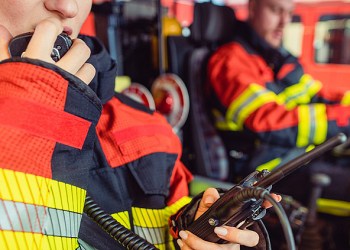
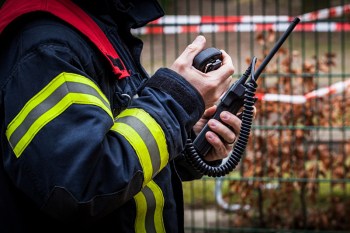
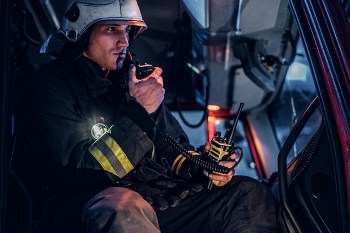
Use your assigned channel, identify the intended receiver and your unit, and deliver the report in the order your department teaches. Speak clearly and keep the transmission focused on your assignment.
Use familiar location designations so command knows exactly where conditions exist. Listen for acknowledgment, clarify anything misunderstood, and avoid filling airtime with unrelated details while other crews are waiting to transmit.
Keep Emergency Traffic & Accountability Distinct
A CAN report provides an operational update; a personnel accountability report, or PAR, verifies personnel accountability under your department’s procedure. Neither substitutes for declaring a Mayday when firefighter distress meets your department’s criteria.
Use the required emergency traffic or Mayday procedure immediately when appropriate. Don’t bury an urgent safety message inside a routine progress report or delay it while trying to complete the acronym.
How CAN Reports Differ From A Fire Incident Report
A CAN report supports decisions during operations, while a written fire incident report documents the response for records, analysis, and review. Your radio updates may help establish that record, but they don’t replace required documentation.
According to the U.S. Fire Administration, NFIRS, the National Fire Incident Reporting System, was decommissioned in 2026 and replaced by NERIS, the National Emergency Response Information System. Neither name describes the CAN radio reporting format.
Turn Radio Updates Into Useful Command Board Notes
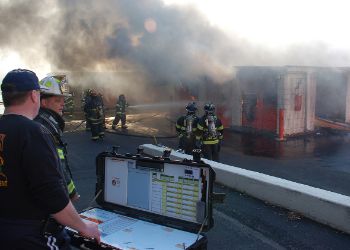
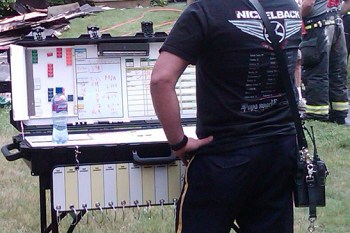
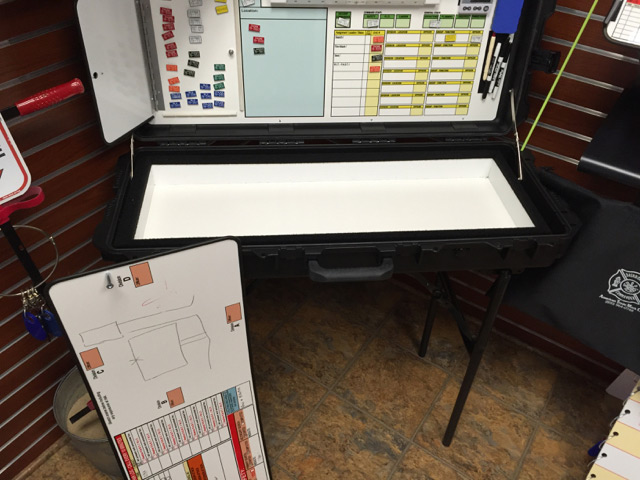
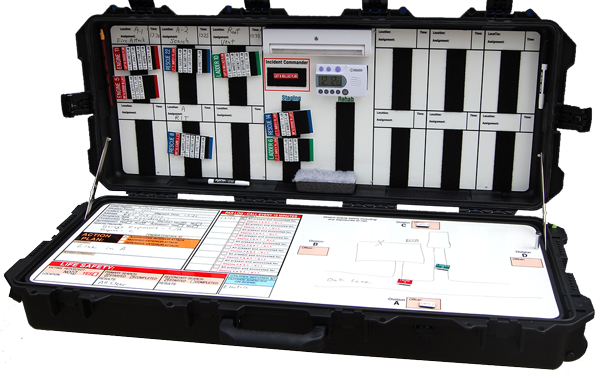
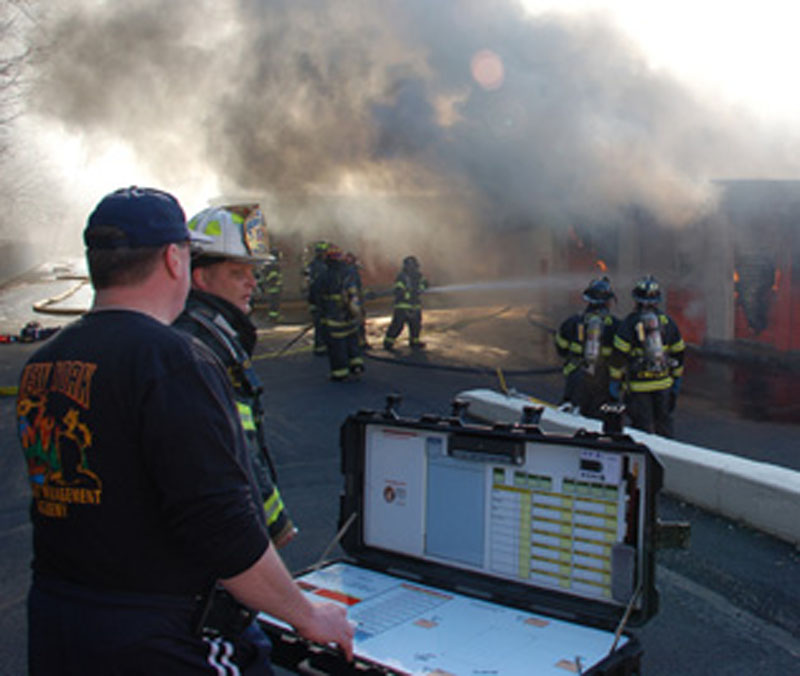
A command board gives the incident commander a place to connect incoming reports with crew assignments and incident priorities.
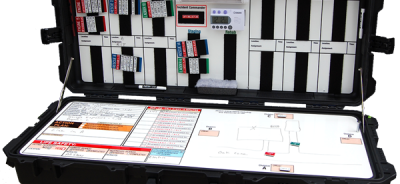
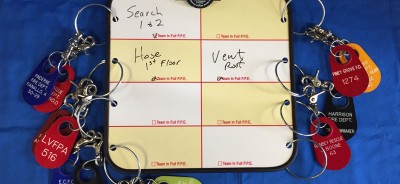
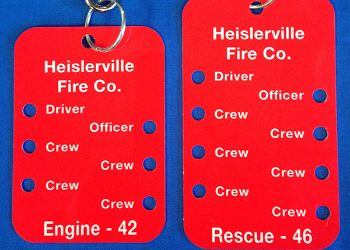
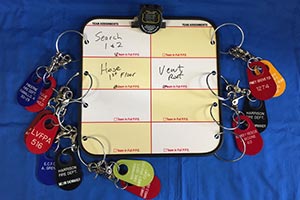
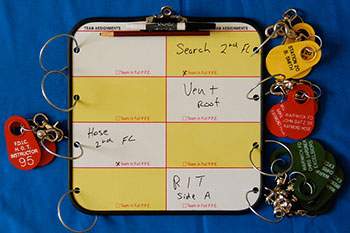
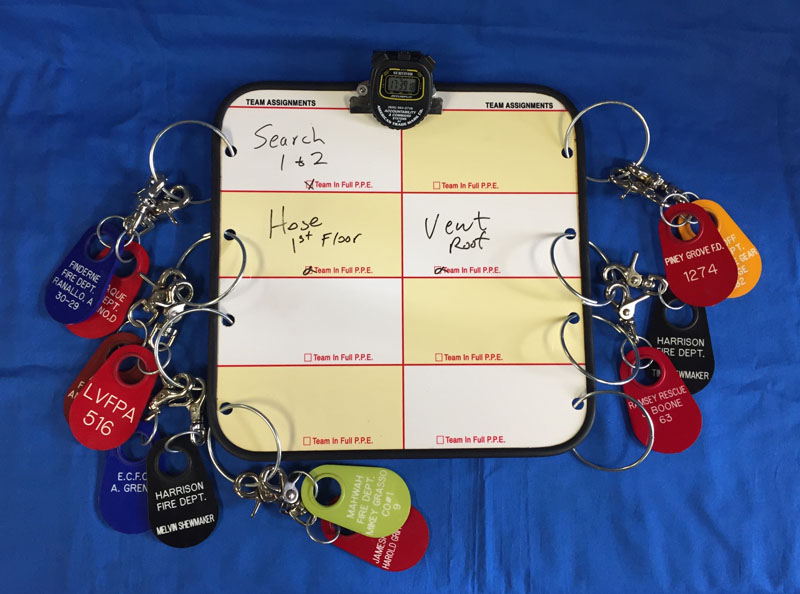
American Trade Mark Co.’s Case Commander® Incident Command System has dry-erase space for size-up notes, assignments, special hazards, and tactical planning, along with magnetic tags representing apparatus, officers, and crews.
Keeping those entries current helps command retain the operational picture as radio updates arrive and assignments change.
Practice CAN Reports Before The Next Response
Build short radio updates into your company drills, using changing conditions and incomplete objectives rather than repeating the same script. Have the receiving officer explain what they understood and what decision the report supports.
Compare the transmitted location and assignment with the command board entry. This exercise reveals vague descriptions, missing needs, and misunderstandings while your crew has time to correct them.
Support Clear Reporting With The Right Command Tools
Consistent CAN reports give command useful information; an organized command system helps keep that information visible. Match your board layout and accountability tools to the way your department assigns crews and records updates.
Browse our incident command boards and firefighter accountability products from American Trade Mark Co., and order online to support your department’s command procedures.
Related Posts
Building an accountability tag system for a volunteer fire department in the United States...
A fire department accountability standard operating guideline gives departments across the USA a consistent...
Accountability considerations for wildland and brush fire operations across the United States start with...
Choosing custom firefighter plaques gives your department a lasting way to recognize service, leadership,...
Across the United States, fire departments rely on structured systems like firefighter ID tags,...
Fire departments across the United States rely on the National Incident Management System (NIMS)...
Firefighting is a demanding profession that requires precision, quick decision-making, and coordinated efforts to...
The importance of firefighter accountability tags cannot be overstated in the realms of fire...
Is your community adding a mobile command center to your emergency services garage? What...
According to statistics from the National Institute for Occupational Safety & Health, many of...
Firefighter Safety is a multi-agency effort, so our New Jersey-based American Trade Mark Company...
Our team at the New Jersey-based American Trade Mark company knows that a firefighter’s...
American Trade Mark wants to ensure that every hero gets home safely, which is...
During a time of mask-wearing and social distancing are firefighters really at risk? After...
Share information quickly and clearly in an emergency. Efficient resource allocation, firefighter safety, and...
Firefighters put their lives on the line day in and day out, year after...
At American Trade Mark, we manufacture and distribute custom products and accessories to compliment...
At American Trade Mark, we offer incident command boards for departments of all sizes...
Ensuring effective fireground communications for both firefighters and incident command with strategic planning and...
Improve fireground communication and firefighter safety with fire department communication tips for bad weather...
At American Trade Mark, we understand that the incident commander and incident safety officer...
Track departments and communicate more efficiently with tools for coordinating emergency response from American...
As fires in the wildland-urban interface continue to rise, so do the demands on...
We want to help incident commanders find ways to reduce firefighter stress with tips...
As a nationwide provider of firefighter accountability and incident command equipment, American Trade Mark...
Before diving head first into the latest and perceived greatest, at American Trade Mark,...
Incident command and firefighter safety have come a long way since Benjamin Franklin’s 1736...
Don’t get caught off guard on your next emergency response call. At American Trade...
At American Trademark we've put together some high-stress fireground communication tips for when your...
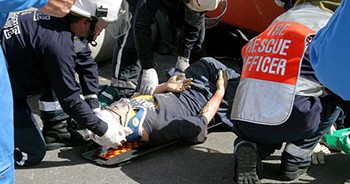
At American Trademark, we understand that to run an effective emergency response team it...
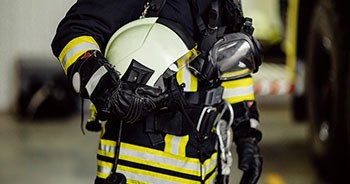
At American Trademark, we've put together a list of useful tips for accountability officers....
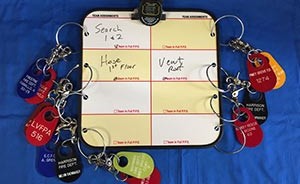
At American Trademark, we want to make sure that you are aware of how...
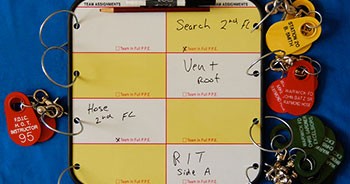
When you’re a firefighter, everyone looks out for everyone else by wearing ID tags—and...
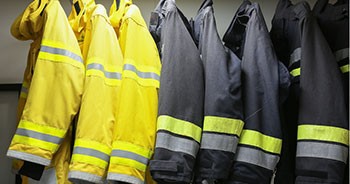
Equipment accountability is important for first responders which is why American Trade Mark offers accountability...
American Trade Mark specializes in the manufacturing of first responder scene safety products and...
As an industry leader in products dedicated to fire personnel tracking and accountability plan...
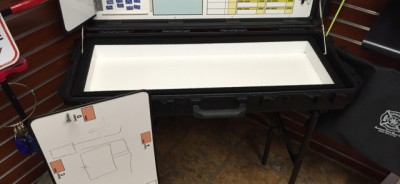
Here at American Trade Mark, we understand that choosing the right command board for...
American Trade Mark Co. is a well-known leader in the firefighter accountability system field...
At American Trade Mark, we serve communities by making it possible to keep track...
Enhance your fire department’s personnel accountability system with American Trade Mark Co. accountability tag...
Firefighter tracking systems are a vital part of first responder safety. They help Incident...
Firefighter status boards are an essential part of managing successful fire ground operations. American...