
How Command Boards Help Track PAR Checks in Real Time
How command boards help track PAR checks in real time is a practical fireground accountability issue for departments across the United States. A personnel accountability report (PAR) confirms that assigned members remain accounted for, but incident command also needs a clear way to track which crews have reported, where they’re working, and which responses still require follow-up.
What A Personnel Accountability Report Confirms
A personnel accountability report is an organized roll call used to verify the status of crews operating at an incident. During a PAR check, company officers or division supervisors confirm whether all members under their supervision remain accounted for according to department procedures.
A PAR does more than confirm a headcount. The report can also reinforce the crew’s assignment, location, and operating status. Each department should define its terminology, reporting sequence, and required PAR triggers through its standard operating guidelines.
Why PAR Checks Become Harder As Incidents Expand
A PAR check may remain simple during a small response with only a few companies. Complexity increases as mutual aid arrives, crews move between divisions, supervisors change, or command shifts operations from offensive to defensive.
- Crews moving without an immediate board update.
- Similar unit designations from different agencies.
- Reports arriving outside the expected sequence.
- Supervisors managing more crews than planned.
- Radio congestion delaying PAR responses.
A Fire Command Board Creates A Shared Operating Picture
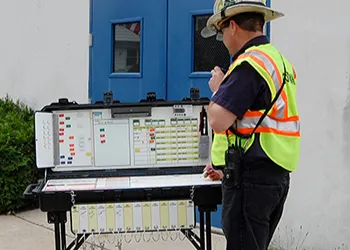
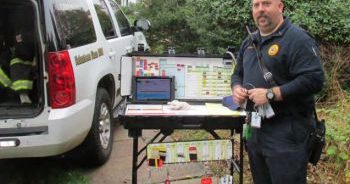
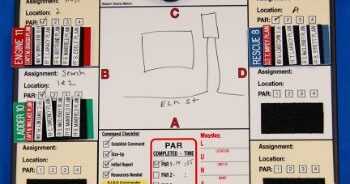
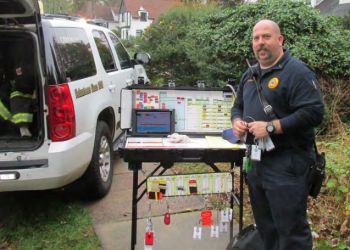
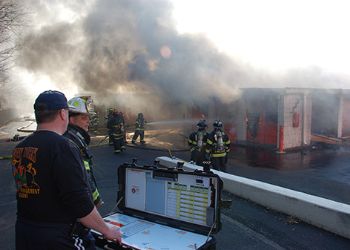
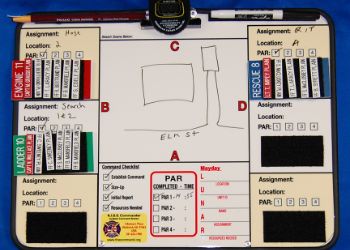
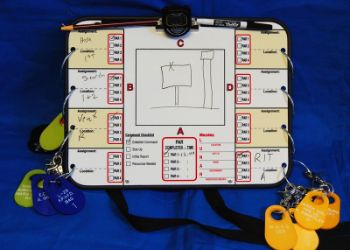
A fire command board organizes personnel, apparatus, assignments, divisions, and PAR information in one visible location. The board doesn’t replace radio communication or direct supervision. It records the information command receives and makes the current accountability picture easier to review.
This visual structure reduces dependence on memory. Incident command can look at the board and see which crews operate in the hazard area, who supervises them, and how each resource fits within the incident organization.
Record Assignments Before The PAR Check Starts
A reliable PAR begins with accurate assignment tracking. Command staff should place each crew, tag, or passport on the board as soon as command makes the assignment. They should then move the marker whenever the crew changes locations or tasks.
Use PAR Timers & Logs to Keep Checks Consistent
Some command boards provide a timer or PAR log that helps command monitor incident time and document completed checks. A timer can prompt command staff to check whether department procedures call for a scheduled PAR. The log creates a clear sequence of confirmations as the incident continues.
Track Each Response As Radio Reports Arrive
Real-time tracking means command updates the fireground board as crews answer. A simple method can mark each assignment as pending, confirmed, or unresolved. The exact system should match your terminology and board layout.
This process prevents a delayed response from disappearing into radio traffic. It also helps the accountability officer distinguish between a crew that hasn’t answered and one whose report command received but didn’t record.
Keep PAR Tracking Aligned With Incident Command
PAR tracking works best when the board mirrors the incident command structure. Crews should appear under the division, group, or supervisor responsible for them. This arrangement allows command to request reports through the established chain instead of calling every unit individually without structure.
As the incident expands, the fireground board should expand with it. Command staff can add divisions, staging, rapid intervention resources, mutual aid companies, and other functions while preserving clear accountability.
Connect Accountability Tags With The Command Board
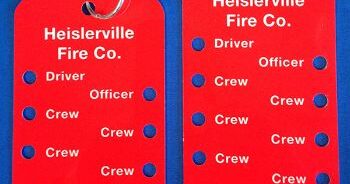
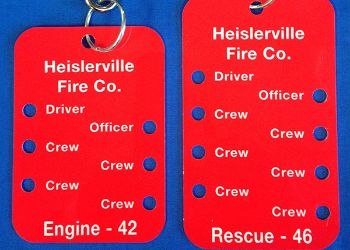
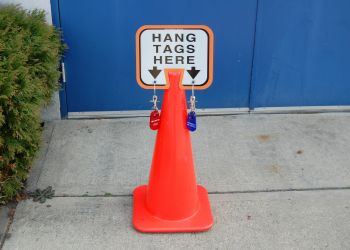
Accountability tags, collection rings, and passport systems identify the personnel assigned to a company or operating area. The command board adds tactical context by showing where those crews operate and what they’re doing.
Together, these tools create a stronger firefighter accountability system than either tool provides alone. Tags help identify who is present. The board helps incident command track where each crew operates, who supervises it, and whether command has completed the latest personnel accountability report.
Strengthen Real-Time PAR Tracking With The Right System
Clear PAR procedures and a current fire command board help incident command turn radio reports into organized accountability information. The board provides a visual record of crew assignments, completed checks, and unresolved reports while supporting the department’s established command structure.
American Trade Mark Co. offers customizable incident command boards for fire departments and first responder agencies across the United States. Choose a system that gives your department a clearer, more consistent way to manage accountability at every incident.
Related Posts
Managing mutual aid accountability across emergency departments in the United States is critical for...
Fire hose testing helps ensure the safety and reliability of your firefighters' equipment during...
Proper maintenance and timely assessment of fire gear are crucial to ensure the safety...
Firefighters are always on call, even when they’re not on the clock. Ensuring readiness...
Across the United States, fire departments continually face challenges in effectively tracking and managing...
Managing a chemical spill involves numerous challenges, often requiring coordination across multiple agencies and...
Secondary collapses are one of the most dangerous threats firefighters face on the fireground....
Fireground safety is a given priority, but even the most experienced crew may overlook...
Fireground accountability is crucial for maintaining safety and efficiency during emergency operations. Despite rigorous...
Magnetic command boards are a practical and flexible tool for organizing search-and-rescue missions. They...
American Trade Mark Co. is committed to supporting first responders nationwide by providing valuable...
In developing safe and effective responses to gas leaks nationwide, it is critical for...
Preserving a fire scene is important for helping first responders understand and investigate the...
Wildfire smoke poses significant risks to firefighter health, requiring rigorous safety protocols to minimize...
Ensuring firefighter safety through rigorous gear inspection and maintenance is fundamental to any fire...
Firefighting is a demanding profession that requires precision, quick decision-making, and coordinated efforts to...
Helmet decals are more than a means of identification or decoration for firefighters. These...
The importance of firefighter accountability tags cannot be overstated in the realms of fire...
Firefighting is a challenging profession where every second matters and can be the difference...
Firefighter equipment markers have a crucial role in ensuring fire services' safety and efficiency....
Ensuring firefighter safety amidst the challenges posed by electrical fires is a paramount concern...
Ensuring firefighter safety in high-risk industrial settings requires strict adherence to safety protocols and...
In the dynamic and demanding world of emergency response, every second counts. It's essential...

As the popularity of food trucks continues to grow, first responders need to have...
Incident command places immense pressure on your leadership team. Rapid decision-making during an emergency...
When emergencies strike, effective incident command strategies save lives. However, methods employed to manage...
Are you looking to improve your communications when deploying your incident command truck in...
Crew-based accountability is essential for firefighters to do their job successfully, and accountability tags...
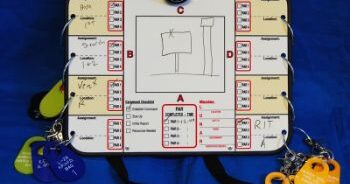
While training to send and receive mayday calls is part of every firefighter trainee's...
At American Trade Mark, we know just how grueling but rewarding a career in...
According to statistics from the National Institute for Occupational Safety & Health, many of...
Firefighters often arrive first on the scene of not only fires but national disasters...
Every day, firefighters risk their lives to save people and property, which makes implementing...

A building collapse situation has the potential for serious harm to emergency personnel with...
First Responders should have five functional areas set up within their Incident Command Systems...
At American Trade Mark we know firefighters encounter dangerous conditions on a consistent basis,...
First responders go all out for their communities daily, without any thought of recognition,...
COVID-19 has impacted our communities in every way. Surprisingly, however, despite warnings to distance...
Hotel and resort fires are unique because of the sheer size, height, and number...

Tracking first responders in hoarder home fires is crucial for safety, and at American...
Bolster your current wildfire fireground communications with incident command systems and tools from American...
Get, communicate with, and track the people and information you need during your next...
Limit chemical exposure hazards in your firefighters with accountability tags from American Trade Mark....
Improve your firefighter safety and survival rates with these nine tips from American Trade...
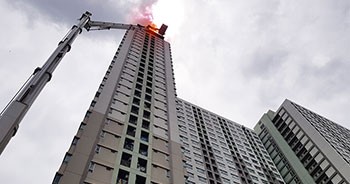
Face the uniquely difficult set of challenges involved in high rise firefighter safety with...
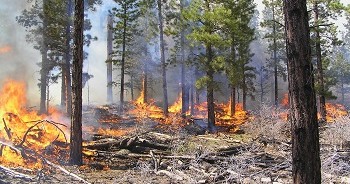
Whether you are on a dedicated woodland fire crew or IC for a structural...

During a time when first responders are being asked to be prepared for more...
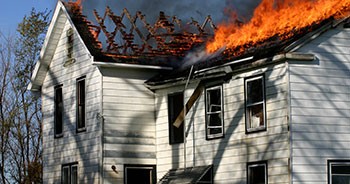
If you're wondering how to keep firefighters safe during defensive firefighting, count on the...
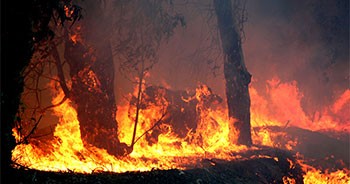
At American Trade Mark, we serve nationwide as a leading manufacturer of wildland fire...

At American Trademark, we want to help you with risk management and firefighter injury...
At American Trade Mark Co. our priority is helping you stay safe from common...
At American Trade Mark, all of our products are made with the safety of...
The most important job of the Incident Commander is firefighter scene safety. Communication, organization,...
At American Trade Mark, we offer an effective range of accountability products geared towards...


If your department is looking for additional funding to ensure your firefighters have all...